

Make / Model Search
New models - Audi - Q4 - e-tronAudi sharpens Q4 e-tron pricing for 2027Updated Q4 e-tron lands with significantly lower pricing, more equipment, faster charging21 Aug 2026 AUDI Australia will sharpen the value equation of its Q4 e-tron when the updated midsize electric SUV arrives next year, cutting as much as $24,250 from the asking price and introducing a new 150kW entry variant.
Scheduled to reach Australian showrooms in the first half of 2027, the revised Q4 e-tron range will open from $71,650 plus on-road costs for the new rear-wheel drive model, some $13,250 below the outgoing Q4 45 e-tron.
In a break from the usual premium charged for coupe-style SUV derivatives, Audi will ask the same $71,650 for the Q4 e-tron SUV and Sportback in rear-wheel drive form.
The savings are greater for quattro variants.
Audi has priced the updated Q4 e-tron quattro SUV from $81,650 plus on-road costs, while the Sportback quattro starts from $83,250. Both are $24,250 cheaper than the Q4 55 e-tron quattro variants they replace.
But Audi has not achieved the lower entry price simply by discounting the existing Q4.
The new rear-wheel drive version steps down to a 150kW/350Nm rear-mounted electric motor, compared with the 210kW/545Nm output of the outgoing Q4 45 e-tron, while gross battery capacity falls from 82kWh to 63kWh.
Usable battery capacity is 59kWh.
Audi Australia has not yet published a WLTP range figure for the entry model, although it has confirmed DC charging at up to 160kW and a claimed 10-80 per cent recharge time of 27 minutes.
Audi Australia director Jeff Mannering said the changes would strengthen the Q4 e-tron’s position as the entry point to the brand’s battery-electric range.
“The new Audi Q4 e-tron range showcases the brand’s leading technology, connectivity and high levels of appointment in the compact, premium segment, and represent an even more compelling gateway to the brand’s all-electric line-up,” he said.
“With greater efficiency and faster charging capabilities, along with a new interior design that features the digital stage and the availability of a passenger-side front screen for the first time in the segment, the Q4 e-tron range punches well above its weight in terms of its technological offering and high levels of appointment.”
While the rear-drive model gives up power and battery capacity in return for its lower price, the quattro retains the larger 82kWh gross, 77kWh usable battery and gains a 250kW dual-motor drivetrain.
Audi lists outputs of 134Nm from the front motor and 545Nm at the rear, with the all-wheel-drive Q4 capable of accelerating from 0-100km/h in 5.4 seconds.
Driving range is rated at 494km WLTP for the SUV and 509km for the Sportback.
DC charging capacity also increases, from 175kW previously to 185kW, although the claimed 10-80 per cent charging time remains 27 minutes. Battery preconditioning can be initiated automatically or manually.
The quattro gains progressive steering and selectable damper control, along with an S line exterior package comprising revised bumpers, a body-coloured Singleframe grille, and 20-inch Audi Sport alloy wheels.
An augmented-reality head-up display is also standard.
Audi has made broader changes inside, adopting its latest ‘digital stage’ cabin layout and adding more standard equipment despite the lower prices.
The dashboard now houses a 12.8-inch MMI touchscreen alongside an 11.9-inch Virtual Cockpit Plus instrument display, with wireless Apple CarPlay and Android Auto connectivity, Audi connect plus, and two cooled wireless phone chargers included across the range.
The base rear-drive models also come standard with Matrix LED headlights, 19-inch alloy wheels, leather-appointed trim, heated and electrically adjustable front seats, driver memory, three-zone climate control, and ambient cabin lighting.
A 3D surround-view camera is fitted across the range and includes trained parking functionality and reverse assist, allowing the vehicle to automatically retrace a previously driven path for up to 50 metres.
The driver assistance package includes adaptive cruise assist, emergency assist, front and rear cross-traffic assistance, side assist with exit warning, swerve and turn assistance, traffic-sign recognition, and proactive occupant protection.
quattro buyers can additionally option a 12.0-inch passenger display, which Audi says is the largest passenger-side screen it currently offers.
It provides access to navigation, media and entertainment functions, with a privacy system designed to prevent its content being visible to the driver while the vehicle is moving.
Importantly, Audi’s decision to position the rear-drive Q4 at $71,650 + ORC could have implications beyond its showroom competitiveness.
Both body styles fall below the $75,000 vehicle price threshold applying to changes to the Federal government’s Electric Car Discount from April 1, 2027.
Under the revised arrangements, qualifying EVs below that figure retain the full fringe benefits tax exemption, while eligible vehicles priced above $75,000 but below the applicable fuel-efficient Luxury Car Tax threshold receive a reduced concession.
Audi has acknowledged government incentives were among the considerations behind the Q4’s repositioning, potentially strengthening the case for the rear-drive variants among novated lease customers.
The new pricing also closes much of the gap between the Q4 and highly specified electric SUVs from mainstream and newer-market brands.
A Tesla Model Y Premium Long Range AWD is currently listed from $68,900 + ORC, while the Kia EV5 GT-Line AWD costs $71,770 + ORC, and the 475kW Zeekr 7X Performance AWD $72,900 + ORC.
Against those models, the entry Q4 will carry a comparatively small premium, a considerable shift from the positioning of the outgoing range.
Audi still faces a technical disadvantage against some newer EV rivals, however, with the Q4 continuing on the Volkswagen Group’s MEB platform and its 400-volt electrical architecture.
The company has ruled out converting the current-generation Q4 to an 800-volt system because of the extent of hardware changes required.
That leaves maximum charging speeds of 160kW for the rear-drive version and 185kW for the quattro some way behind the 300kW-plus capability offered by a growing number of newer-generation electric vehicles.
Further development of the Q4 range is understood to be under way, including a higher-output version above the 250kW quattro and changes to battery technology.
Audi is also developing a lithium-iron phosphate battery for lower-cost versions, potentially replacing the nickel-manganese-cobalt chemistry used by the current entry model as it looks to reduce battery cost and vehicle weight.
The pricing overhaul follows a decent first full year for the Q4 e-tron in Australia.
Audi sold 939 examples in 2025, making it the brand’s top-selling EV and putting it comfortably ahead of the then-new Q6 e-tron, which recorded 551 deliveries.
The order has reversed so far this year as Q4 stocks run down ahead of the updated model.
Audi delivered 216 Q4 e-trons in the first seven months of 2026, allowing the newer Q6 e-tron to move ahead in the company’s local EV sales rankings.
The updated Q4 e-tron range is due in Australian showrooms during the first half of 2027.
Orders for the quattro are already open, with Audi offering customers who place an order during 2026 a complimentary six-year/90,000km service plan.
Ordering details will be announced closer to launch.
2027 Audi Q4 e-tron pricing*:
*Pricing excludes on-road costs. 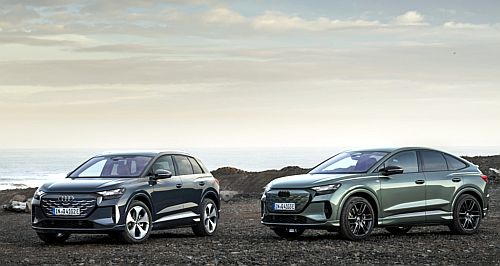 Read more11th of August 2026  Audi Q9 V6, SQ9 V8 confirmed for AustraliaLargest Audi SUV yet lands in 2027 with diesel V6 Q9 followed by V8-powered SQ917th of July 2026  Audi Q3 updates unveiled in EuropeUpdates include a new passenger display, a valet mode, and improved PHEV towingAll new modelsMotor industry news GoAutoNews is Australia’s number one automotive industry journal covering the latest news, future and new model releases, market trends, industry personnel movements, and international events. |
|


 Alfa Romeo
 Abarth
 Audi
Audi Aston Martin
 BMW
BMW Bentley
 Ferrari
 Chevrolet
 Ford
Ford Fiat
Fiat GWM
GWM Foton
Foton Hyundai
 Honda
Honda Jaguar
 Isuzu
Isuzu Kia
Kia Jeep
Jeep Land Rover
 Lamborghini
 Maserati
 Lexus
Lexus McLaren
 Mazda
Mazda MG
MG Mercedes-Benz
 Mitsubishi
 Mini
Mini Peugeot
 Nissan
 Ram
Ram Porsche
 Rolls-Royce
 Smart
Smart Skoda
Skoda Suzuki
 Subaru
 Toyota
 Tesla
Tesla Volvo
Volvo Volkswagen
 Zeekr
Zeekr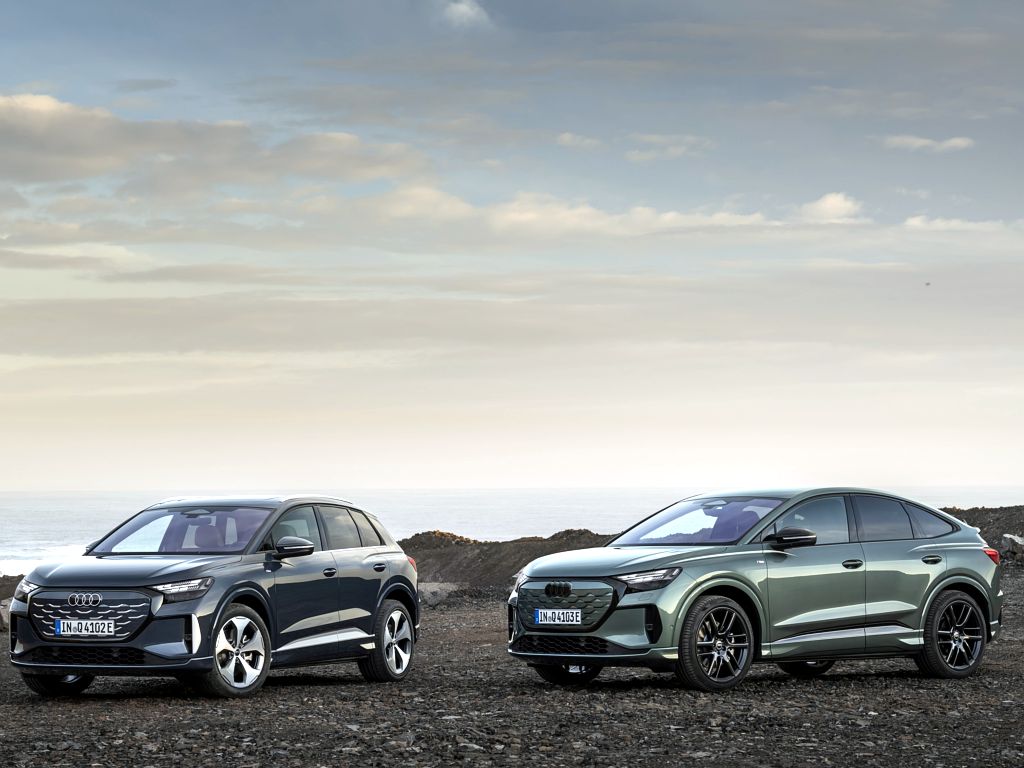

Connect with us


Facebook Twitter Instagram